Morning
Soft natural light, a fresh and quiet bedroom, and a clear route to the bathroom, wardrobe and kitchen.
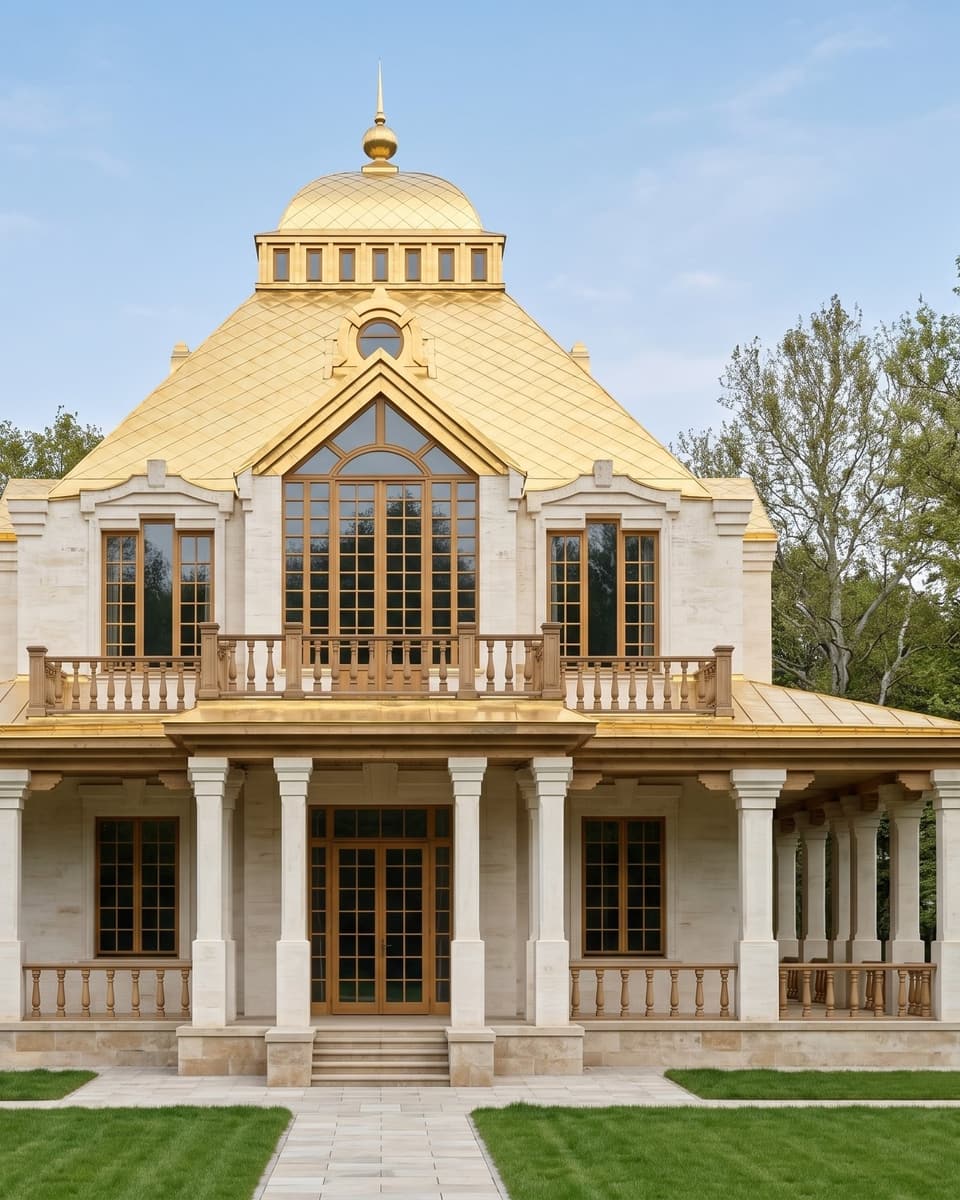
I design homes where human proportions, daylight, quiet, a controlled indoor climate and a close relationship with the land form one coherent setting for everyday family life.
The introductory meeting establishes the scope. Once the questionnaire is complete and the project begins, the first document is a personal wellness brief: daily-life scenarios become decisions about siting, proportions, light, quiet, indoor climate and clear criteria for verification.
You do not need to understand every service in advance. Choose your situation and the next page will show only the route, material and decision relevant to you.
Does your situation fall between these routes? Describe it in two lines — we will begin with a diagnosis, not an unnecessary service.
A home can be large, contemporary and costly, yet feel arbitrary inside: the bedroom is not quiet, daylight arrives at the wrong time, noise travels through the whole house, the garden lacks privacy, and dimensions follow the construction grid rather than the people who live there.
Mistakes in orientation, proportion, the centre of the plan, overheating, acoustics and privacy are difficult to correct once construction is complete. They must be found before the facade, services and finishes are fixed.
A facade can be copied. Finishes can be bought. The inner system of a home has to be designed from the beginning.
The life you want is translated into plans, sections, engineering briefs and clear quality criteria.
Soft natural light, a fresh and quiet bedroom, and a clear route to the bathroom, wardrobe and kitchen.
Work, conversation and solitude coexist without competing for the same space.
The kitchen, living room, terrace and garden bring the family together, while private rooms remain quiet.
Darkness, acoustic protection, air and temperature work together as one complete bedroom scenario.
We begin with the site, family, way of life, sleep, light, privacy, budget and the true purpose of the home.
Private HouseA conventional architectural brief defines what and how to build. The wellness method also records how people will live there and how the quality of key decisions will be verified.
Floor area, rooms, style and site constraints.
Family scenarios, the desired condition in each zone, the potential of the site and criteria for quality.
When briefs are separate, architectural and engineering decisions may be coordinated late.
Proportions, routes, light, air, heat and quiet are coordinated from the concept stage.
A set of project documents.
Also the logic behind decisions and criteria for checking them. In the full cycle, an authorial wellness passport records requirements, responsibilities, verification status and operating guidance. It is not a WELL certificate.
Strong contemporary architecture may address all these factors. The distinction here is systematic: criteria are set in advance and carried through every project discipline.
Not eight options and not a separate wellness room. This is one connected system linking people, place, architecture, engineering and life after move-in.
Dimensions follow a construction grid, while furniture and movement are tested too late.
Heights, axes, openings, furniture and clearances are checked against the owners' bodies and routines.
The plan supports natural movement, and rooms feel neither arbitrarily tight nor needlessly oversized.
Dimension studies, plans, sections and furniture-layout scenarios.
The house is placed by setbacks and outlook, while sun, wind, noise and neighbours are considered after the plan.
Terrain, sun, wind, views, shade, noise and privacy shape the site strategy before the house is fixed.
Rooms receive suitable orientations, while terraces and the garden are better protected from weather and unwanted views.
Site mapping, sun and shade studies, and analysis of views, wind, noise and constraints.
Rooms satisfy a list, but there is no clear order between shared, transitional and private zones.
A coherent centre and a clear hierarchy of open, transitional and protected spaces organise the plan.
Guests, shared life, work and solitude can happen at the same time with less interference.
Zoning diagrams, axes, privacy thresholds and sightlines.
Corridors, doors, storage and service routes are resolved separately and begin to conflict.
Daily, guest and service routes are modelled together with doors, thresholds and storage.
Everyday tasks require fewer detours, and entrance and circulation spaces are easier to keep orderly.
Movement diagrams, door swings, storage studies and key sightlines.
Glazing is chosen for appearance or views without considering time of day, glare or summer sun.
Room orientation, opening size and shading are coordinated with the family's daily rhythm.
The bedroom, workspace and shared rooms receive light when it is actually useful.
Solar studies, elevations, sections and calculations within the agreed scope.
Noise and overlooking appear only after walls, stairs and plant zones have already been fixed.
Noise sources, adjacent uses, sightlines and degrees of privacy inform the plan from the outset.
Sleep, concentrated work, conversation and rest receive different acoustic and visual conditions.
Adjacency matrices, noise mapping, partition requirements and separately commissioned engineering calculations.
Ventilation, heating and finishes are selected after the plan and may work against one another.
Air, temperature, humidity, odour, materials, durability and care are treated as one brief.
Indoor-environment requirements are clear before procurement and easier to coordinate across specialists.
An indoor-environment brief, material matrix and engineering calculations within the contracted scope.
The project ends with a drawing set, while operating guidance and future change remain undocumented.
Seasonal modes, maintenance, changes in the family and possible room transformations are considered.
Owners understand how to use the design and which changes will preserve the system of the home.
Adaptation scenarios and, in the full cycle, an authorial wellness passport. It is not a WELL certificate.
A panoramic window is tested for views, daylight, glare, overheating, privacy, acoustics and cooling. A bedroom is designed as one complete night-time scenario. A staircase becomes part of movement, light, sound and the hierarchy of the home.
Compare the two approaches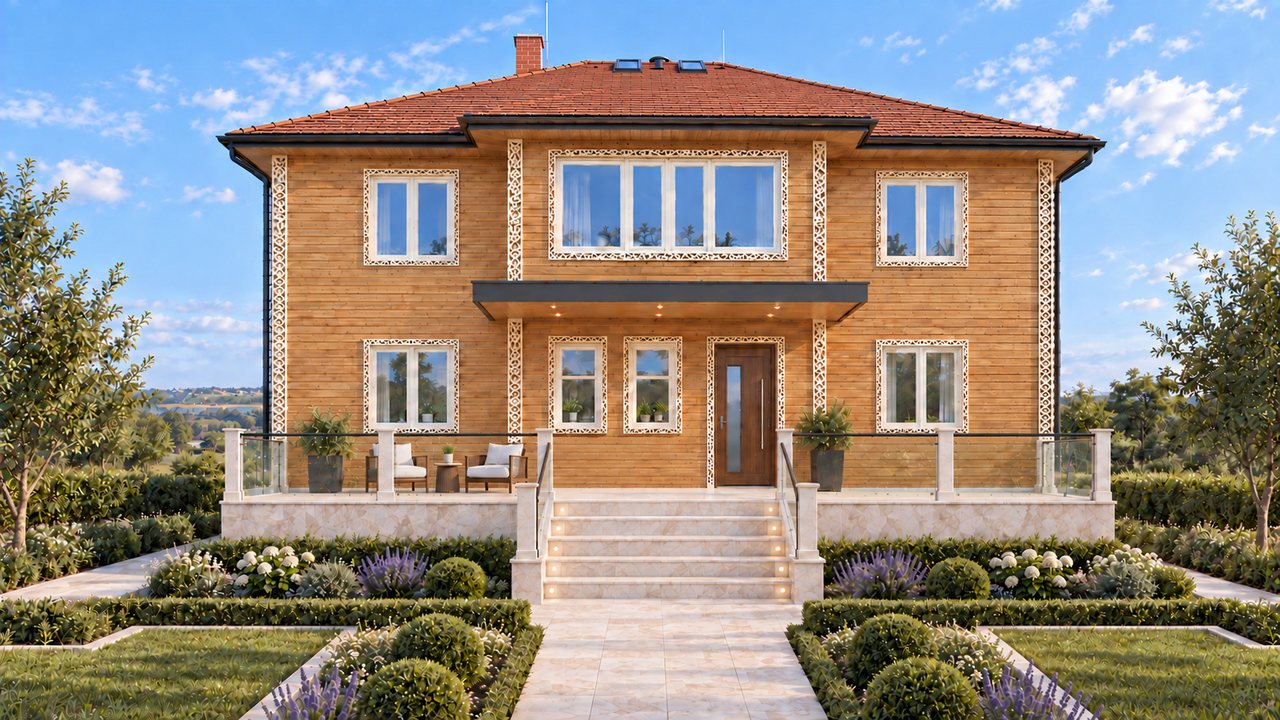
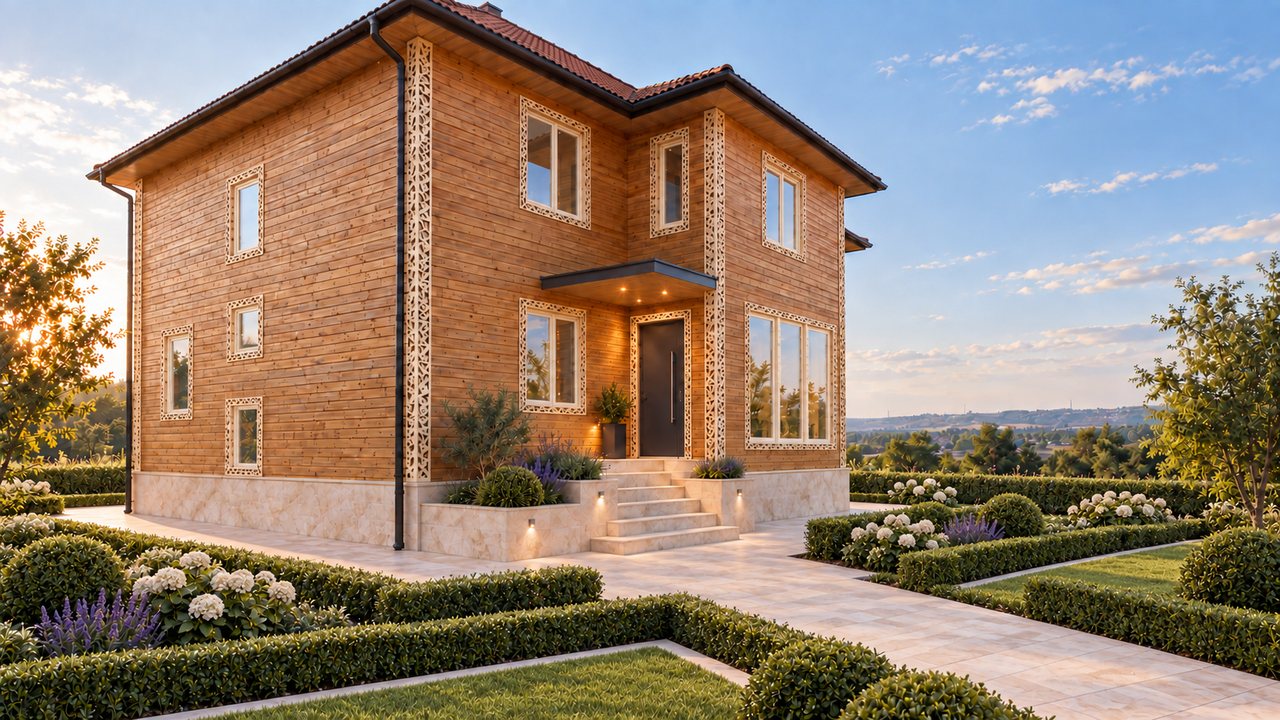
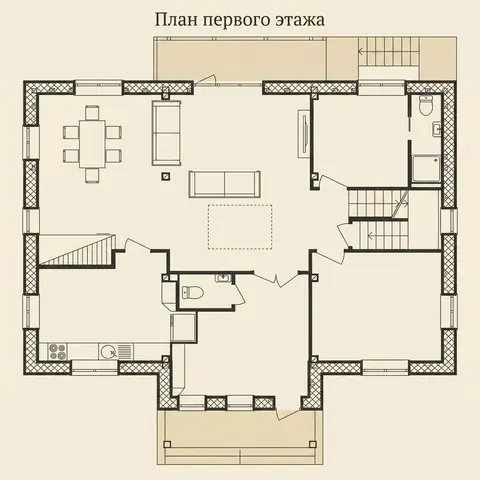
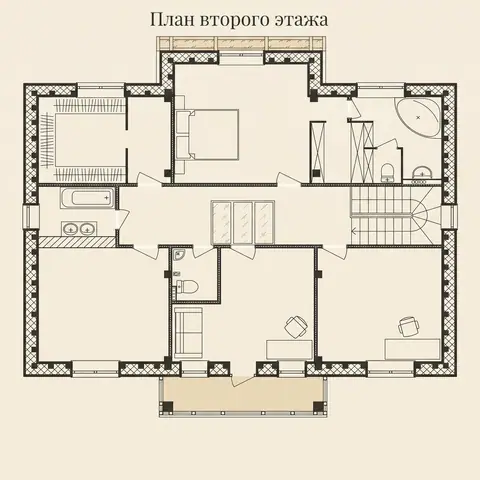
A pilot home that buyers can experience, that can be tested as one real product and only then scaled.
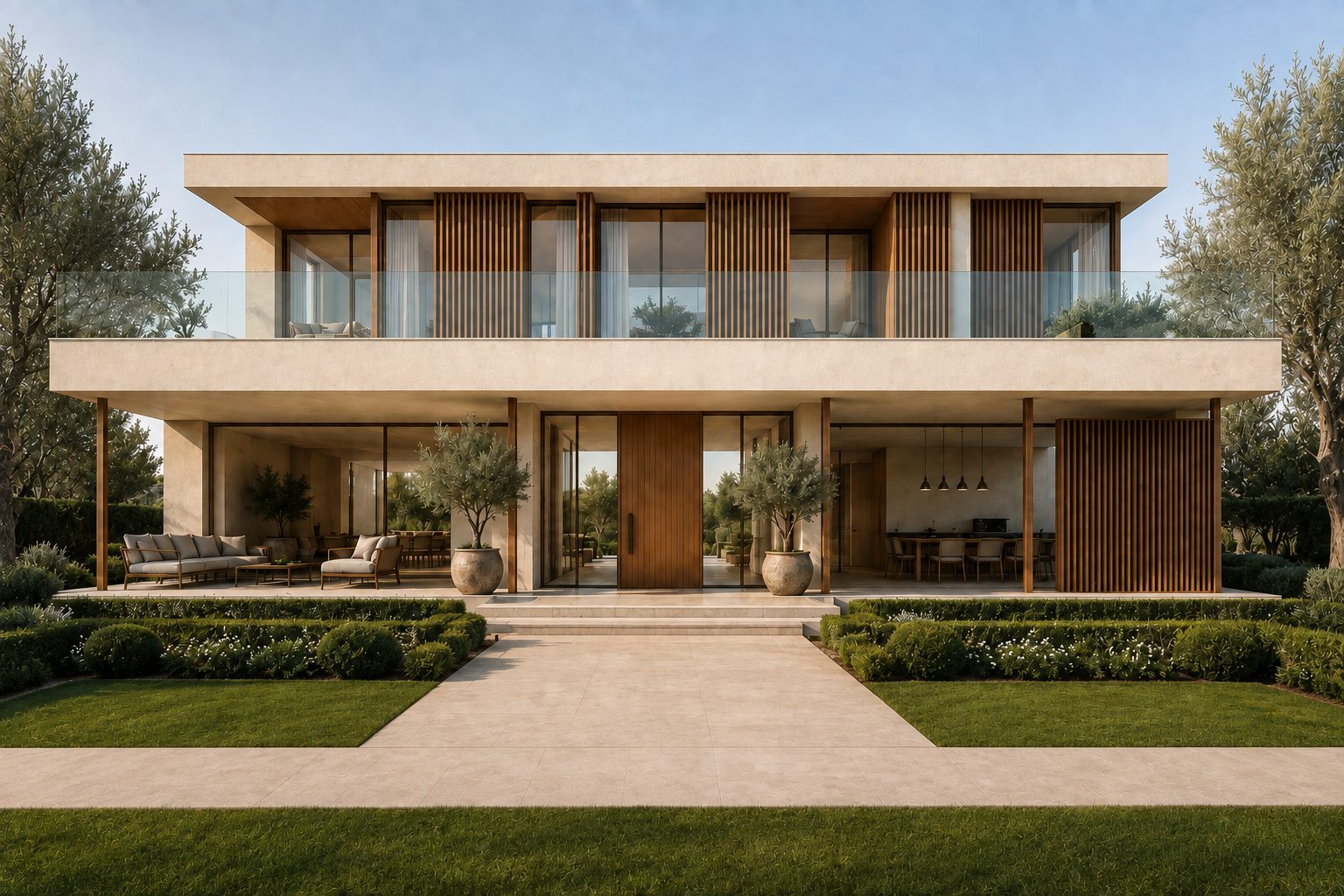
For a developer, wellness architecture becomes a product tool rather than a decorative philosophy.
Developer propositionGuidance establishes a framework. Research explains specific mechanisms. The site, climate, local regulations, calculations, simulations, product data and agreed measurements determine the parameters of an individual home.
Tradition and research are not presented as the same thing. Vastu Vidya, the canons of Vitruvius and Palladio, and the Russian sazhen system inform compositional logic. Contemporary sources help frame criteria for light, air, noise and thermal comfort.
The status of each key requirement is stated explicitly: proposed / calculated / specified / measured / accepted.
According to the Global Wellness Institute's preliminary update of 12 May 2026, wellness real estate grew from $151 billion in 2017 to $876 billion in 2025. The forecast for 2030 is $1.8 trillion; compound annual growth in 2019–2025 was 23.6%.
These figures describe the global wellness-real-estate sector. They do not represent Veda-Dom's fees or guarantee returns for any individual project.
Global Wellness Institute sourceThese are five stages of quality formation, not a contractual programme. After the complimentary introduction, the concept proceeds through four paid stages; later services are commissioned separately.
Daily scenarios, habits, privacy, simultaneous activities and plans for the future.
Climate, sun, wind, terrain, views, noise, privacy and constraints.
Orientation, proportions, centre, routes, rhythm of light and connection with nature.
Architecture, structure, services, materials, interiors and landscape are tested together.
Control points, commissioning, agreed verification and operating guidance.
Some quality comes not from spending more, but from allocating the budget better: removing accidental floor area, placing functions more precisely and coordinating systems in advance.
The cost of change rises along the sequence: brief → concept → detailed design → construction → alteration after move-in. We therefore use the opportunities of the site and architecture first, then add technology and materials with a clear contribution.
Choose the right format, review the scope and evidence, then begin the conversation.
We will discuss your mornings, quiet, focus and privacy, family routines, the views and light you need, your relationship with nature, future changes in the family and budget priorities.
Build my priority mapIn 30 minutes we will identify the starting priorities; the wellness brief is prepared once the project begins.